Supporters of a campaign to celebrate the exploits of an historic trawler marked a high tech twist in the story by setting up a video link to connect the vessel’s home in Hull with her final resting place 8,000 miles away on a beach in the South Atlantic.
In Viola’s home port, members of the Viola Trust gathered at Trinity House with supporters who had backed the campaign to bring the ship back to the city.
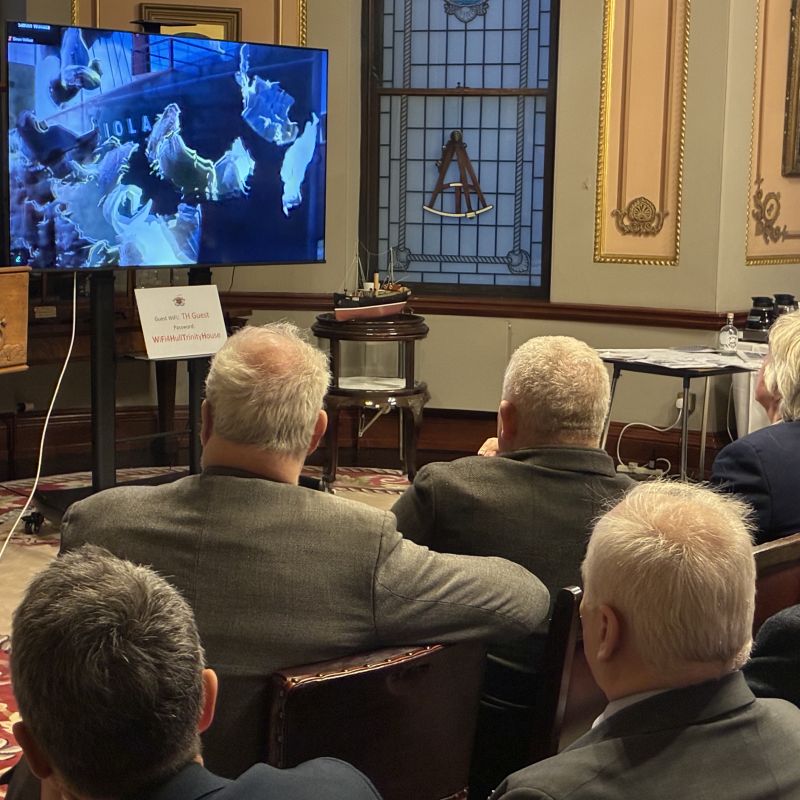
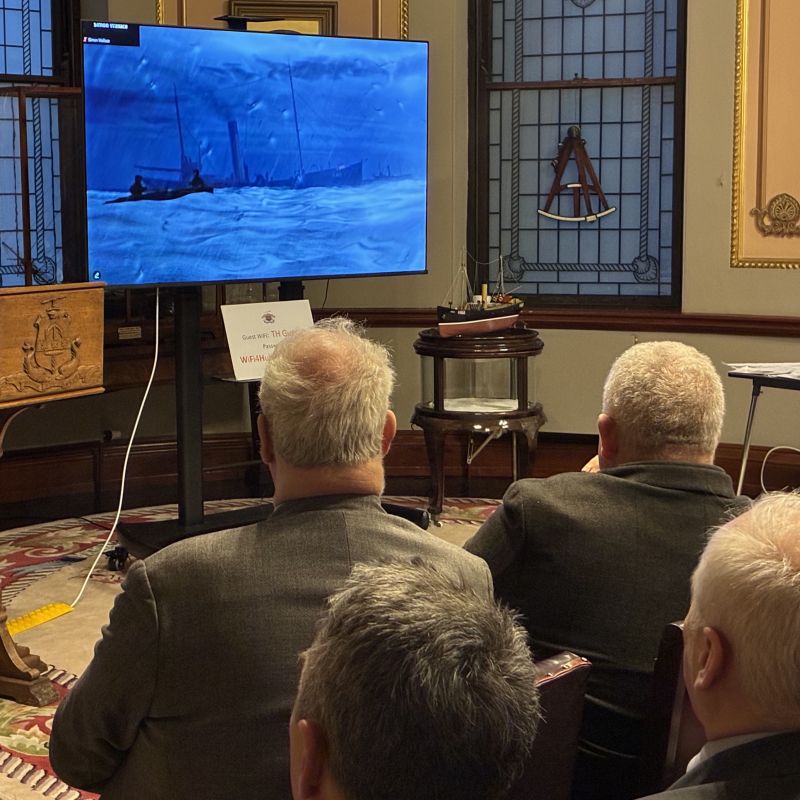
In Stanley, members of the Government of South Georgia and the South Sandwich Islands (GSGSSI) also watched as the Trust presented the premier of two films – a “Virtual Viola” recreation of the ship’s adventures and a companion production setting out how the homecoming bid progressed before becoming a victim of the pandemic.
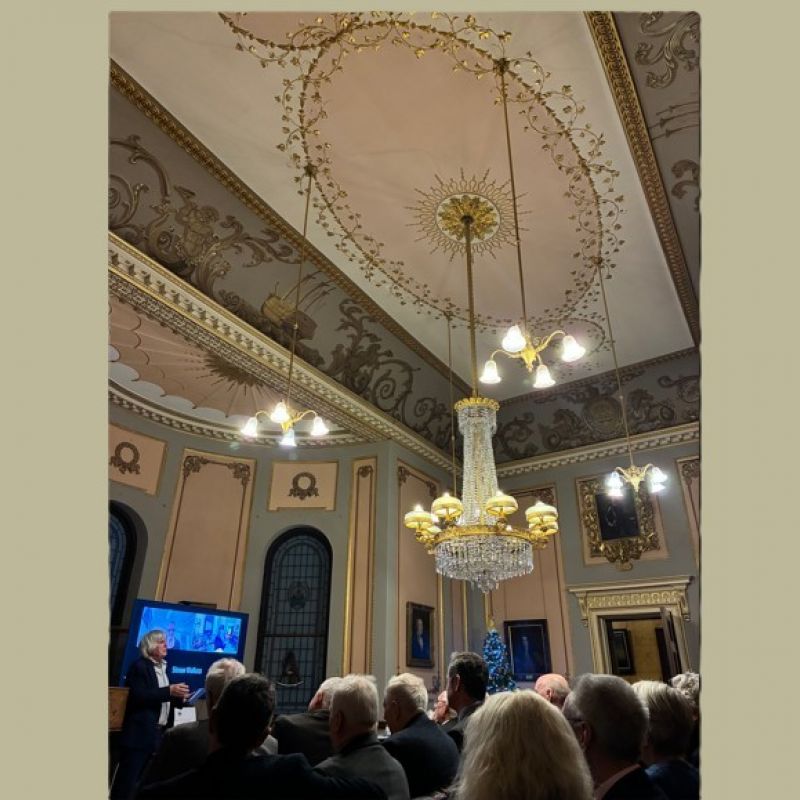
Guests in the Court Room at Trinity House included representatives of the South Georgia Association, the South Georgia Heritage Trust, The British Antarctic Survey and Lloyds Register of Shipping. Also present were people from the University of Hull Maritime Heritage Trust and Hull City Council, as well as business leaders and members of the local community who backed the project over the years. They heard that the films will be shown by Hull Maritime, by the Trust’s partners in South Georgia and on cruise ships, sharing the Viola’s story with passengers bound for Grytviken.
Mike Ross, Leader of Hull City Council, said: “The launch was a very special event with the two films combining to tell a compelling story which, like the magnificent venue of Trinity House, is unique to Hull and will now promote our city’s maritime past and present to a worldwide audience.
“The timing is perfect as we move towards unveiling the Hull Maritime attractions which are reshaping our tourism and heritage landscape. The Viola is a powerful example of the important role vessels from the city played in the nation’s maritime history.”
The Viola, which will be 120 years old on 17th January, was built at Beverley shipyard by Cook, Welton & Gemmell in 1906 and operated as part of the Hellyer fleet of boxing trawlers before switching roles to help defend the UK in the First World War. She left Hull for the last time in 1918 on a career which took her to
Norway, Africa and the South Atlantic catching fish, hunting whales and elephant seals and supporting expeditions.
Viola was mothballed after the closure of the whaling station at Grytviken, South Georgia, before one final episode in her remarkable history. Beached in her current location, the old trawler was the target in 1982 of scrap metal merchants from Argentina. But on landing they raised the Argentine flag, an action which triggered the Falklands War.
The story captivated the community in Hull and was taken around the world by the Viola Trust, which was set up in 2016 to bring Viola back to Hull and to promote awareness and education of the ship and the city’s fishing heritage.
Progress was positive until the Covid catastrophe struck, preventing all travel to South Georgia and sending costs soaring. The films tell how the Trust had received pledges for half of their original £3m target. Having carried out detailed surveys of Viola and of any possible impact on the pristine South Georgia environment of removing her, they were ready to mount the salvage operation in autumn 2020.
But by the time routes into South Georgia opened again the price of repatriation was prohibitive and the Trust focused instead on its education commitment.
Fundraising had only ever been at a modest level, with the aim being to find a major backer by building awareness through influential contacts, the media, and innovative products including Viola gin made by Hothams of Hull and paintings by Holderness artist Larry Malkin.
A contribution from the University of Hull Maritime Heritage Trust funded a plan B, under which photography and video collected by the Viola Trust could be used by experts at the renowned Glasgow School of Art (GSA) to create the virtual reality depiction.
Mairi Macleod, Director of Operations for GSGSSI, watched the films from her office in Stanley in the Falkland Islands. Her colleague, Hull-born Captain Simon Wallace of the fishery patrol vessel Pharos SG joined the broadcast from King Edward Point in South Georgia, across the cove from the Viola's current resting place.
Mairi said: “We are deeply grateful to the Viola Trust for keeping the story of the Viola alive, and for ensuring that her remarkable heritage continues to inspire across generations. The Viola’s legacy links us across oceans, from Hull to Stanley to Grytviken and her story remains an enduring testament to resilience, service and maritime history.”
Paul Escreet, Chair of the Viola Trust, said: “Part of our commitment is to promote South Georgia within the Hull community and I hope very much that we will be able to welcome Mairi to our city one day, introduce her to some of the people who supported our campaign and to Trinity House, which was a most fitting location and itself added drama to the occasion.
“Both films were just brilliant – the virtual reality depiction by Glasgow School of Art and the story of the project by a Hull-based filmmaker who used some excellent locations which are all part of our city’s maritime heritage. The way in which we embraced technology to connect with our friends in South Georgia & the South Sandwich Islands reinforced the innovation behind this phase of the project.
“We had an excellent turnout from the local maritime and business communities and the general public as well as from much further afield. We were delighted to welcome important figures from Hull City Council and Hull Maritime and we look forward to seeing our contributions take their place among the attractions.”
Paul Chapman, Professor and Director of Emerging Technology at GSA and a former member of the virtual reality and simulation and visualisation team at the University of Hull, travelled from Glasgow to attend the launch.
He said: “Having lived, worked and studied in Hull and Beverley, I felt a strong personal connection to this project. It has been inspiring to collaborate with the Viola Trust and work with such an extraordinary range of archive materials, from rare photographs and film to detailed engineering drawings. Bringing these together with advanced visualisation technologies has allowed us to reconnect people with one of
Hull’s most remarkable stories in a vivid and accessible way.
“The launch event in Trinity House was a fantastic celebration of the city’s history, and it was clear that Hull Maritime regards this film and the story of the Viola as an important part of the region’s heritage. We are honoured that our work contributes to preserving and sharing that legacy.”
Picture details
Viola Trust
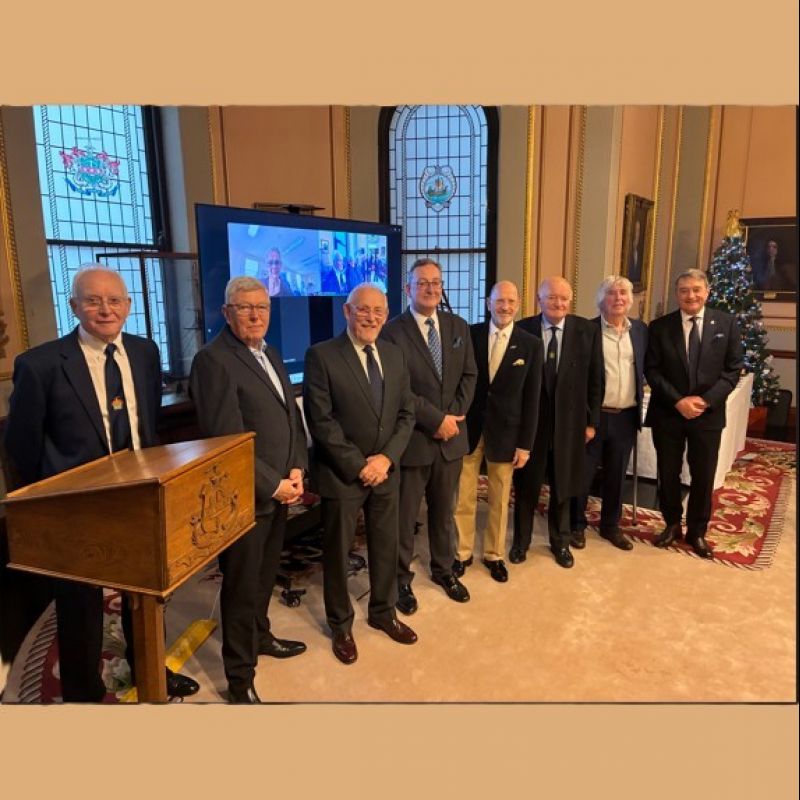
From left, Viola Trust chair Paul Escreet, patron Alan Johnson, project manager Norman Court and trustees Dominic Ward, David Drewry, Andrew Marr, Robb Robinson and Nick Bateman. In the background is Mairi Macleod, who joined the event from her office at Stanley in the Falkland Islands.
Virtual Viola
The recreation by Glasgow School of Art, peeling back the layers of history to show the Viola in the days when she joined the boxing fleet operating out of Hull.
Viola at sea
The Viola crew transferring the catch by rowing boat to the cutters ready for delivery to Billingsgate.
Court Room
Robb Robinson addressing the invited audience in the magnificent Court Room at
Trinity House.