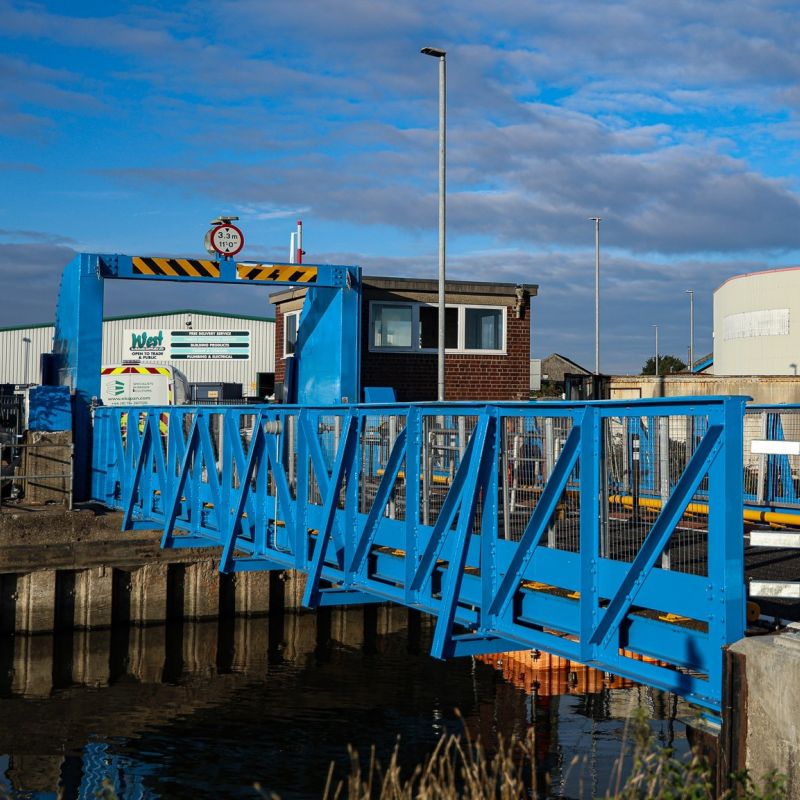
A 20-tonne metal bridge in Beverley has reopened to the public following a major engineering and improvement project.
Weel Bridge, which carries traffic over the River Hull between Beverley and the village of Weel, reopened to road traffic on Friday evening (25 September) following a £1m investment by East Riding of Yorkshire Council.
The nearby Beverley Household Waste Recycling Site, which was temporarily closed as part of arrangements to maintain road safety during the bridge refurbishment programme, is due to reopen at 10am today (Saturday 26 September).
The 73-year-old aluminium structure underwent an extensive upgrade to make it stronger for the future, extend its life, and improve safety and access for traffic.
The bridge was removed from the banks of the River Hull, at the end of Grovehill Road, in April and was transported to Blyth near Doncaster for specialist refurbishment by council contractor Esh Construction.
Earlier this month (12 September) the bridge was returned with new blue paintwork and underwent installation and safety checks until today's reopening.
Engineers from Esh Constructon will still continue technical work on the bridge's new modern operating system which controls the bridge rising and lowering to accommodate boat traffic travelling along the river.
Councillor Paul West, East Riding of Yorkshire Council’s cabinet member for environment and transport, said: “I'm delighted we've finally been able to reopen Weel Bridge following its major overhaul.
"Thank you to local residents and drivers, especially villagers in Weel and to people who use the Weel HWRS, for bearing with us while we completed this scheme.
"The temporary closure was unavoidable, but we now have a much stronger and safer bridge for motorists, pedestrians and cyclists to use."
Improvement work carried out to the bridge during the £1m scheme included:
- Structural repairs and strengthening of the aluminium structure,
- Mechanical, electrical and bridge control system upgrades,
- Safety improvements, including parapet refurbishment,
- Road realignment works to improve vehicle access and improve visibility for drivers,
- Widening of the shared footway and cycleway.
The three-tonne weight limit and 3.3m height restriction remain the same.
The bridge was built in 1953. The last major improvements were carried out in 2012, but it has been closed for short periods for minor work several times since.
Weel Bridge is a bascule bridge, meaning it can be raised and lowered to cater for boat traffic along the river.